
Horror Sandbox: Sprank Monster
IsandaresAction
3.235.00 Reviews
- Version
- 1.4.8
- Installs
- 1.00M
- Age Rating
- Teen
Screenshots
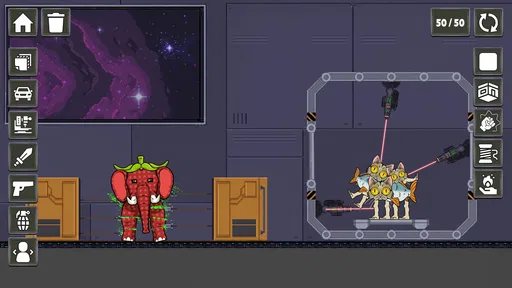
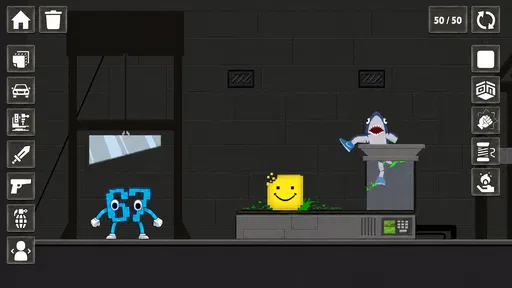
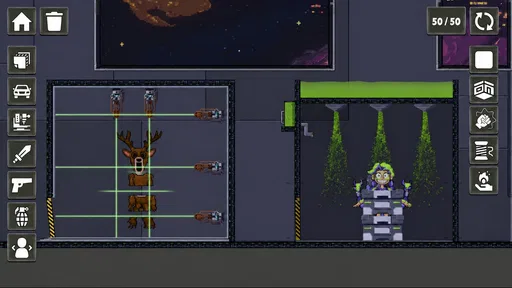
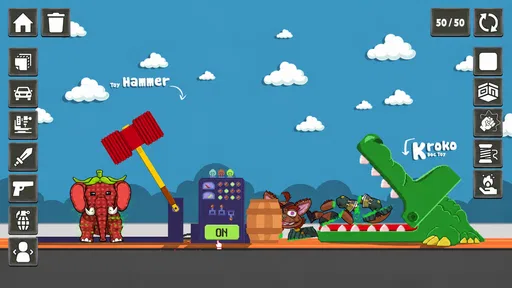
Our Review of Horror Sandbox: Sprank Monster
 Analysis by Appyee
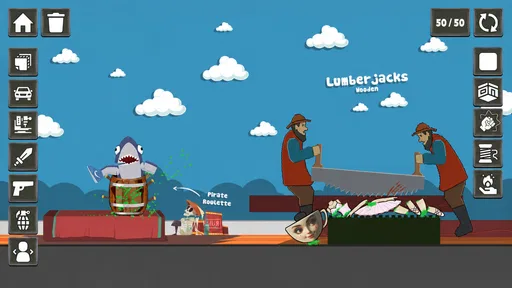
Horror Sandbox: Sprank Monster is an action game from Isandares that puts experimentation ahead of a traditional mission-driven adventure. I approached it as a small digital playground: choose a scene, interact with ragdoll characters and objects, and see what kind of strange horror moment develops. That makes the game immediately understandable, but it also means the quality of your experience depends heavily on how much you enjoy making your own fun.
The basic appeal is clear from the first session. You are not following a carefully written story with a fixed solution. Instead, you get a sandbox where the entertainment comes from testing reactions, arranging situations, and discovering which combinations look amusing, unsettling, or simply chaotic. This is a game for curious experimenters rather than players looking for a tightly guided campaign.
It is free to install, carries a Teen content rating, and runs on Android devices using version 7.0 or later. The current version is 1.4.7, and the game has passed over one million installs. Those details make it easy to try, but the average score of 3.2 shows that the open-ended format will not suit everyone. I think that middle-ground reception is understandable: the premise is accessible, while the amount of lasting enjoyment depends on whether you like creating your own scenarios.
What the first session feels like
My advice is to begin without expecting a conventional horror game. The word “horror” suggests suspense, exploration, and narrative surprises, but this experience is closer to a creative physics toy with a dark visual theme. The fun comes from observing the ragdolls, changing the situation, and deciding what to try next. If you enter with that expectation, the game feels more coherent and less disappointing.
The opening minutes are best treated as a familiarization period. Look at the available controls before trying to create an elaborate scene. Notice which parts of the environment respond to touch, which actions move a character, and which interactions produce a visible reaction. I found that a slow first pass is more useful than tapping everywhere at once, because the game becomes easier to understand when each action has a clear purpose.
There is also a useful distinction between a successful action and a successful session. A successful action might be getting a ragdoll into the position you intended. A successful session is building a sequence that looks deliberate rather than random. New players often chase the second goal immediately and become frustrated. I recommend concentrating on one small result first, then adding another element only after you understand the first.
The game’s strongest quality is its low pressure. You can experiment without needing to memorize a complicated control scheme or commit to a long campaign. That makes it suitable for short breaks, especially when you want something interactive but do not have the time or concentration for a competitive match. It also works as a casual curiosity game: open it, try one idea, and close it when the experiment stops being interesting.
Starting without wasting the first few minutes
After installation, I would avoid spending the first session trying to reproduce a dramatic scene from a video or from someone else’s description. The controls make more sense when you learn their cause-and-effect relationship directly. Begin with a single ragdoll and one nearby interaction. Move slowly, repeat the action, and watch whether the result changes because of position, timing, or the surrounding objects.
This approach gives you a practical mental map of the sandbox. You learn what can be moved, what merely reacts, and what needs a particular placement. That knowledge is more valuable than rushing through several random actions, because the game does not provide the same kind of clear progression that a platformer or action campaign would.
I also suggest keeping the first scene simple. Too many moving parts make it difficult to tell why something happened, especially when physics create an unexpected result. A controlled test may sound less exciting than immediate chaos, but it helps you reproduce an effect later. Once you know how one interaction behaves, you can add a second and create a more intentional sequence.
Players who are sensitive to horror imagery should pay attention to the Teen rating before handing the device to a younger user. The tone is not designed as a gentle family sandbox. Even when the physics are playful, the setting and the treatment of ragdolls can be unsettling. I would not choose it for a child simply because the controls look simple.
How to reach a first meaningful result
Your first useful objective should be modest: create one scene in which the ragdoll ends up where you planned. Do not worry about making it elaborate. Pick a starting position, perform one interaction, and observe the outcome. If it fails, change only one variable on the next attempt. Move the character slightly, alter the timing, or use a different nearby object, but avoid changing everything at once.
This one-variable method is the best practical tip I can offer. It turns random tapping into a small experiment and makes the game feel much more responsive. When the result changes, you have a reasonable idea why. When it does not, you know that the action may not work in that position. Either way, you are learning something that can be applied to the next scene.
Once the basic action works, try building a short chain of events. The important part is not the size of the chain but the timing between steps. Ragdoll movement can make a scene look different depending on where the character lands, so pausing to inspect the result is useful. I found that repeating a simple setup can be more satisfying than constantly searching for a bigger one, because consistency lets you refine the result.
A good first-session routine is therefore simple:
Test one interaction with one ragdoll.
Repeat it while changing only the position or timing.
Keep the version that produces the clearest result.
Add one new element and watch how it changes the scene.
This workflow also helps answer a question many first-time players have: what counts as progress? In this game, progress is not necessarily a new rank or a completed chapter. It is better control over the sandbox and a growing collection of situations you can create intentionally. If that kind of progress sounds rewarding, the game has room to keep you interested.
Where new players can become confused
The biggest source of confusion is expecting every action to have an obvious objective attached to it. In a conventional action game, the interface usually tells you where to go and what success means. Here, the player has to define the experiment. If you keep waiting for a mission prompt to explain the next step, the game may feel empty. When you instead choose a small challenge for yourself, the design makes more sense.
Another common mistake is tapping rapidly when an interaction does not work immediately. That can make the scene harder to read and may move the ragdoll away from the position you wanted. I prefer deliberate taps and short pauses. The pause is not wasted time; it lets you see whether the previous action has finished and whether the next input is being applied to the situation you intended.
Physics-based scenes can also produce results that look inconsistent at first. A ragdoll may fall differently after a small positional change, or an object may affect the scene in a way you did not predict. I would not treat every unexpected outcome as a failure. Sometimes the unplanned result becomes the most entertaining part of the session. The trade-off is that players who prefer precise, repeatable controls may find this unpredictability irritating.
It is worth separating control problems from design limitations. If you cannot tell what an input does, slow down and test it in isolation. If you understand the input but the game still offers no satisfying direction, that is a matter of fit. The first issue can improve with practice; the second may remain. This distinction helped me decide whether to continue experimenting or move on to another game.
The free entry point is convenient, but in-app purchases range from $0.99 to $29.99 per item. I recommend treating optional spending cautiously until you know whether the core sandbox holds your attention. A low-cost curiosity purchase can make sense for a player who already enjoys the format, but paying before understanding the game’s replay value is a poor choice for someone still unsure about the basic loop.
Small techniques that make the sandbox more enjoyable
One technique that improved my sessions was creating a “baseline” scene. I used the same starting arrangement several times and changed only one action. This made it easier to compare outcomes and helped reveal which interactions were genuinely interesting rather than merely surprising once. It is a simple habit, but it gives the open-ended gameplay a structure that the game itself does not always provide.
A second technique is to use failure as a setup tool. If a ragdoll lands badly, do not immediately reset your idea. Look at the new position and ask whether it creates a better angle for the next action. Because the sandbox is built around physical reactions, a failed first step can become a useful starting point. This is especially helpful when you are tired of trying to force one exact result.
A third useful habit is to keep scenes visually readable. When several elements overlap, it becomes difficult to understand what caused the final reaction. I get better results by spacing actions out and checking the scene after each major change. This is not only easier for learning; it also makes the final sequence more satisfying because you can see the relationship between cause and effect.
For short everyday sessions, I would use the game as a ten-minute creative break rather than as a replacement for a full action title. For example, after finishing a routine task, you can open it with one experiment in mind, test two variations, and stop once you have a result worth remembering. That limited goal prevents the open-ended design from turning into aimless tapping.
On the other hand, I would skip it if your main requirement is a strong story, character development, online competition, or a clearly measured progression system. A conventional horror adventure is a better choice for atmosphere and narrative tension. A physics-focused action game with formal challenges is better if you want the game to judge your performance. This title’s appeal is specifically the freedom to make and observe your own situations.
How it compares with familiar action alternatives
Compared with a standard horror game, this one gives you more control over the scene but less reason to care about what happens next. Story-led horror uses pacing, exploration, and mystery to create tension. Here, the player’s curiosity supplies much of that motivation. If you enjoy asking “what happens if I try this?” the sandbox approach can feel refreshing. If you want suspense to come from a carefully written sequence, the experience may seem shallow.
Compared with a typical ragdoll or physics playground, the horror framing gives the experiments a more distinctive mood. The setting makes ordinary physical reactions feel stranger and sometimes more uncomfortable. That atmosphere is the main reason to choose this game over a neutral physics toy. The compromise is that the darker presentation may limit its appeal as a casual game for shared family play.
It also differs from action games built around stages and unlocks. Those games give you a clear reason to master a mechanic, while this one asks you to decide what mastery means. I see that as both its identity and its main limitation. Players who enjoy self-directed play can spend time refining setups. Players who need a visible reward after every few minutes may feel that their effort is not being recognized.
Who should install it and who should pass
I would recommend trying it if you like sandbox games, ragdoll physics, dark humor, and small experiments that can produce unexpected results. It is particularly suitable for players who enjoy making their own challenges and do not need a campaign to tell them when they are finished. The free price makes that trial relatively straightforward, provided the Teen tone is appropriate for you.
I would be more cautious if you are looking for polished narrative horror or a deep action system. The game does not replace a story-heavy title, and its open-ended structure can feel repetitive once you have tested the interactions that interest you. I would also avoid spending on optional items immediately. First decide whether creating scenes remains fun after the novelty of the initial experiments fades.
The developer, Isandares, has positioned the experience around a very specific kind of interaction: tormenting ragdolls in a horror-themed sandbox. That focus is easy to understand, but it is not broad. The game does not need to appeal to everyone to work; it needs to give the right player enough freedom and responsiveness to keep experimenting.
My recommendation after learning the loop
After getting past the first-session confusion, I found the game easiest to appreciate as a compact creative tool rather than a complete action adventure. The strongest moments came when I stopped looking for a hidden objective and started designing small situations with a clear intention. That change in mindset made the controls feel more purposeful and gave my sessions a natural stopping point.
My recommendation is to install it for free, spend the first session learning one interaction at a time, and judge it by the quality of your own experiments rather than by the promise of a conventional horror campaign. Keep spending optional until you know you want more from the sandbox. If you enjoy unpredictable ragdoll behavior and darker play, it can provide amusing short sessions. If you need story, missions, or a dependable progression path, another action or horror game will serve you better.
In the end, Horror Sandbox: Sprank Monster succeeds when you treat it as a place to test ideas. It is not the kind of game I would recommend blindly to every action fan, but I can see why it has attracted over one million installs. For the right player, the freedom to arrange a scene, adjust a detail, and watch the result is the entire point. Try it as a controlled experiment first, then decide whether its open-ended chaos deserves a permanent place on your device.
Verdict
Strengths of Horror Sandbox: Sprank Monster
- Creative sandbox lets you build unusual horror scenes freely.
- Monster designs are memorable and fit the creepy atmosphere.
- Simple controls make experimenting with objects easy.
- Short sessions work well for casual mobile play.
- Offline access may be convenient when no connection is available.
Limitations of Horror Sandbox: Sprank Monster
- Some scenes can feel repetitive after the initial exploration.
- The horror relies more on visuals than deep storytelling.
- Controls may feel imprecise during detailed object placement.
- Progression and objectives can seem limited for experienced players.
- Ads or optional purchases may interrupt the overall experience.
Similar Picks in This Category
View All
Temple Run 2: Endless Escape
Imangi Studios4.1

PUBG MOBILE
Level Infinite4.3

Free Fire: 9th Anniversary
GARENA INTERNATIONAL I4.4

Talking Tom: Hero Dash Run
Outfit7 Limited4.3

slither.io
Lowtech Studios3.9

Sniper 3D:Gun Shooting Games
Wildlife Studios4.6
Frequently Asked Questions
What is Horror Sandbox: Sprank Monster?
Horror Sandbox: Sprank Monster is a creative horror-themed sandbox game where you can experiment with strange characters, monsters, objects, and environments. Instead of following a strictly linear story, the experience focuses on free-form interaction and playful experimentation. You can build unusual scenes, create chaotic situations, and explore the game’s creepy atmosphere at your own pace, making it suitable for players who enjoy casual horror mixed with sandbox gameplay.
Is Horror Sandbox: Sprank Monster suitable for children?
Parents should review the game before allowing younger children to play. Although the sandbox format may look colorful and playful, the app includes horror-inspired characters, unsettling designs, monster themes, and potentially frightening situations. The level of scariness can vary depending on how the player uses the available content, but it is generally better suited to older children, teenagers, or players who are comfortable with cartoon-style horror.
Does the game require an internet connection?
Horror Sandbox: Sprank Monster may offer much of its basic sandbox gameplay offline, allowing players to experiment with scenes without needing a constant connection. However, internet access can still be required for downloading the app, receiving updates, loading advertisements, or accessing certain optional features. Because requirements may change between versions and devices, it is best to check the store listing and test the game after installation if offline play is important to you.
Are there advertisements or in-app purchases?
The game may use advertisements or optional in-app purchases to support development, depending on the platform and version installed. Ads can appear between activities or when unlocking particular content, while purchases may provide extra items, characters, or other bonuses. Before downloading, check the official Google Play or App Store listing for the latest pricing and purchase information, and use parental controls if the game will be played on a shared device.
What devices are compatible with Horror Sandbox: Sprank Monster?
Compatibility depends on the operating system, device model, available storage, and the minimum version required by the current release. Most recent Android and iOS devices should be able to run the game if they meet the store’s requirements, but older phones may experience slower performance, longer loading times, or occasional crashes. Always review the official download page for the latest Android or iOS version, storage requirements, and supported devices before installing.
Play our best games!


